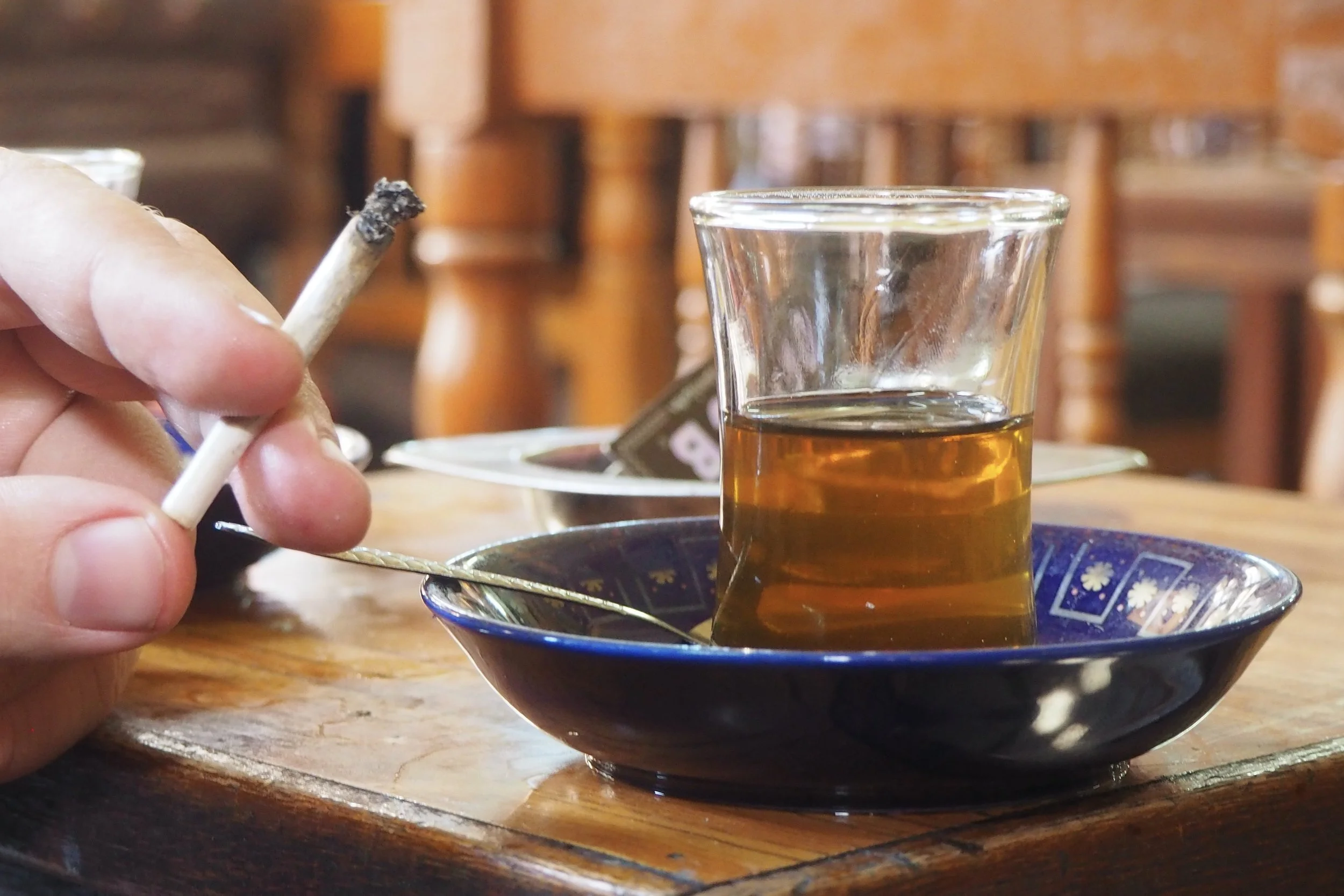
An Istican of Chai Iraqi in a traditional Baghdad tea shop.
Strong, sweet black Iraqi tea (“chai Iraqi”) is the national beverage drunk widely across the country.
Usually served in a small elegantly-shaped glass called an Istican, filled to the brim - often to the point of overflowing into the saucer that accompanies it - you will likely be offered a glass of Iraqi tea almost anywhere you go, especially upon arrival or after meals.
Even if you are not a fan of tea, it is considered impolite to refuse tea from a host.
Iraqi tea is always served black and, unless you’re in a modern cafe, milk is unlikely to be available. It is commonly served pre-sugared, with half a centimetre of granulated white sugar lurking in the bottom of the glass. How sweet the whole drink is to be depends on your preference, as you can either leave the sugar as a sediment or stir it all in, for the full Iraqi tea experience.
Often boiled with the leaves inside the kettle, Iraqi tea is usually strong and can be quite bitter, so you may wish to take an experimental sip before deciding how to proceed with the sugar. If you would prefer a completely sugar-free option, you’ll usually need to request that in advance.
When tea is served in an Istican seated in a saucer, it is not uncommon for Iraqis to drink any overspill from the brimming glass directly from the saucer. If you are a guest, it’s probably wise to see if your hosts sup from the saucer before so doing yourself.
Sometimes, a few cardamon seedpods are added during the tea brewing process, which brings delicious flavour and depth to the drink.
Tea stands are a common sight on Iraqi street corners, instantly recognisable by the large gold-coloured kettles bubbling away either on hot coals or gas-powered stove-tops. Some tea stands may have plastic stools for customers but many do not, and you can either stand there sipping your tea from an Istican, or ask for a takeaway tea, which will be served in a paper cup. Unless the tea is sieved, there may be lingering leaves or tea dust at the bottom of the cup.
This is the cheapest tea you will find and can cost as little as IQD 250 or IQD 500 per glass. As the tea has been well-boiled (sometimes for several hours), it should be perfectly safe to drink.
Noomi Basra - a southern citrus delight
Another favourite national hot drink is a caffeine free, strong-tasting, dark-coloured lemony beverage known as Noomi Basra. To prepare this delicious drink, dried black limes are perforated and boiled up on the stove in a kettle. It is particularly favoured in the colder months but can be found year-round, especially in central and southern Iraq.
Noomi Basra is caffeine free but can still be sometimes quite strong. It is usually also served pre-sugared. Although widely available, including from some tea stands, it is not as routinely available as Chai Iraqi but is well worth the effort of tracking down.
If you fall in love with this drink (and you wouldn’t be the first), the black limes are available to buy at markets to take home with you, although it’s wise to check any regulations or restrictions imposed by your destination country first.
In traditional cafes, tea - either Chai Iraqi or Noomi Basra - will usually be served in the traditional way in an Istican. In the more modern cafes which have sprung up across the country, teabags are sometimes used, but the drink will still not be served with milk unless you specifically request this.
